Convert Knitting Needle Sizes
Pick the size on your needle in any system and see it in mm, US, old UK and Japanese sizes, with the full chart below.
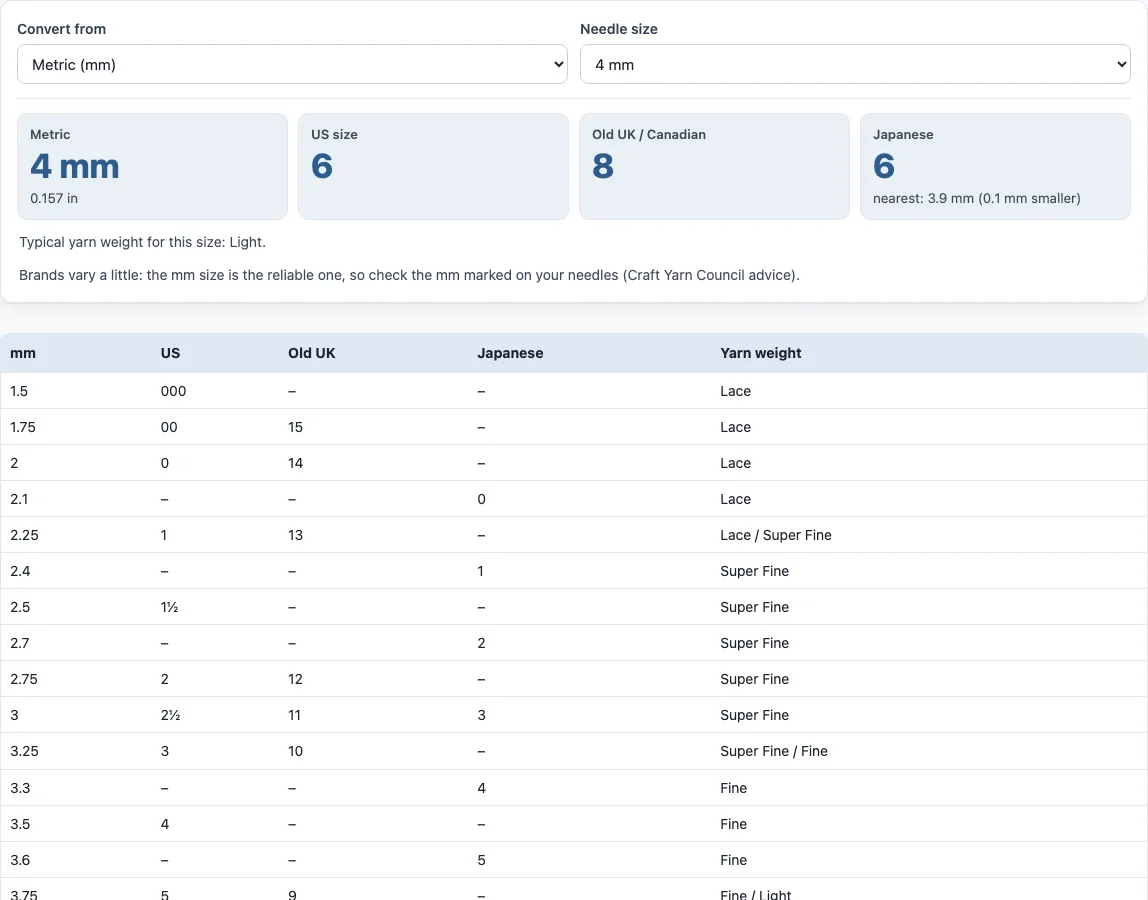
To convert knitting needle sizes, choose the system printed on your needle and pick its size. The converter then shows the same needle in metric (mm), US, old UK or Canadian, and Japanese sizes, plus the typical yarn weight. It runs in your web browser, is free, and needs no sign-up or download. Nothing is uploaded, and it works on phones.
Knitting needle sizes come in four numbering systems, and they do not line up by eye. A US size 8 is not a UK size 8. This page explains how the systems relate, lists the full knitting needle size chart, and includes a printable needle gauge for needles with no marking.
How to use the knitting needle size converter
- Open the Convert from menu and choose the system your needle uses: Metric (mm), US, Old UK / Canadian, or Japanese.
- Pick the Needle size that matches your needle.
- Read the results. The same needle appears in the other three systems, with its typical yarn weight.
- Check the full chart below the tool. The row for your size is highlighted.
- If your needle has an mm size printed on it, compare that number with the result. The printed mm size is the most reliable reading, because brands vary a little.
The results change as soon as you pick a size, so there is no Calculate button to press.
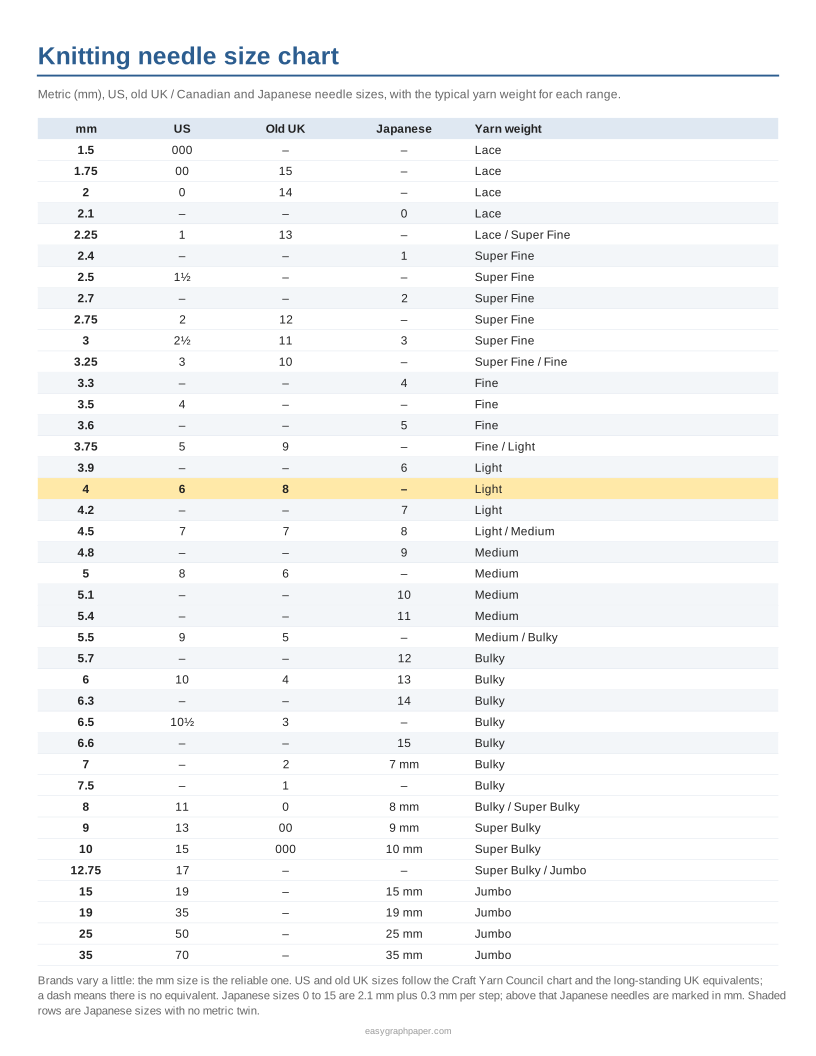
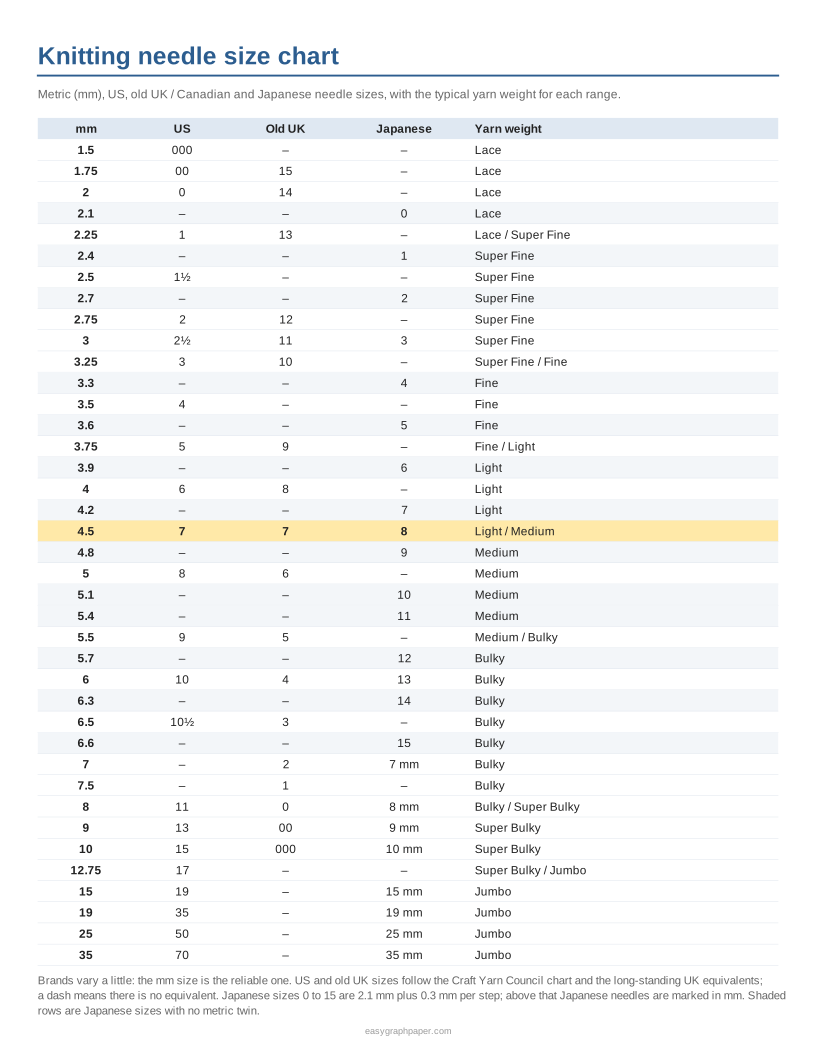
To keep a paper copy, choose what to print in the Print menu: Size chart (the whole 39-row chart on one page, with your size highlighted), Needle gauge (actual size), or Both pages. Then press Print or Download PDF.
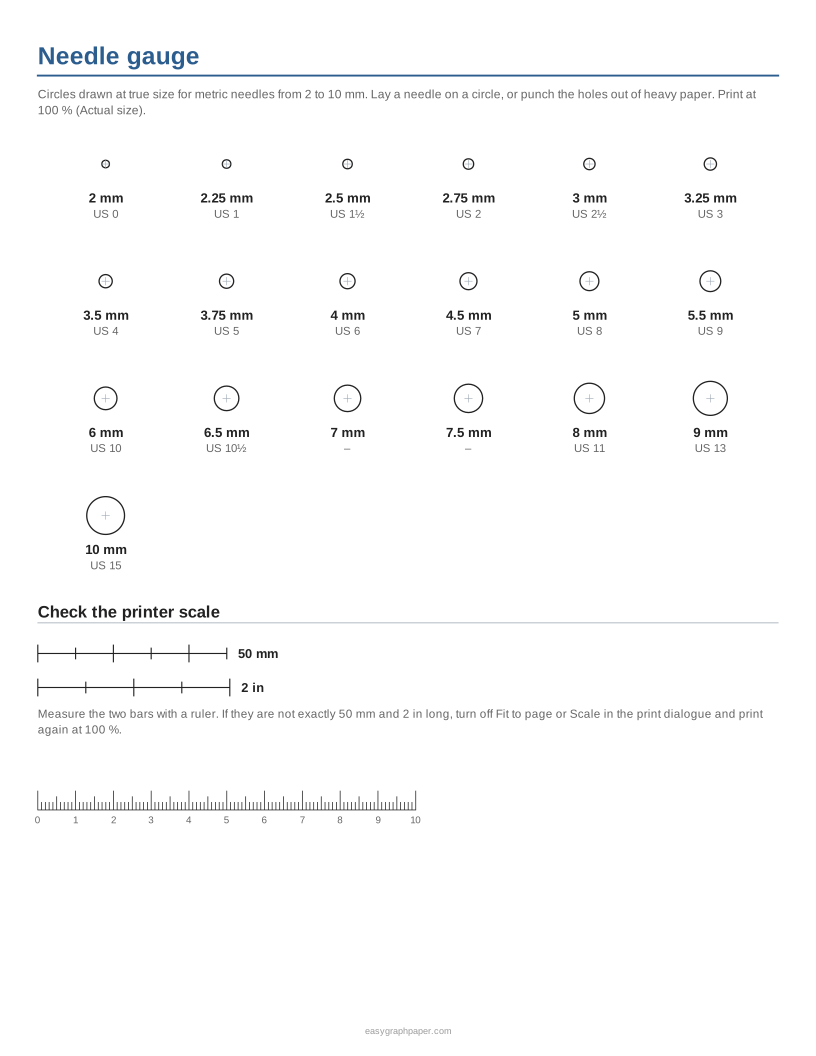
To check a needle with no marking, print the Needle gauge page at 100 % / Actual size and measure its 50 mm bar first. Copy link keeps the chosen system and size in the page address, so you can send a conversion to a friend or open it again on your phone at the yarn shop.
How do I convert knitting needle sizes?
Millimetres are the reference. Each US and old UK size stands for a metric size, and the chart lists each needle as mm = US = old UK. For example, 4 mm = US 6 = old UK 8. Find your number in the column for your system, then read across to the other two.
Japanese sizes are a separate series. Japanese 0 is 2.1 mm, and each number adds 0.3 mm, so Japanese 3 is 3.0 mm and Japanese 13 is 6.0 mm. Japanese sizes that do not equal a metric size have their own chart rows, such as 2.4 mm and 3.3 mm. When there is no exact match, the converter shows the nearest metric size and the difference. For example, Japanese 5 is 3.6 mm, so its nearest metric size is 3.5 mm = US 4, which is 0.1 mm smaller.
US and old UK numbers do not follow a simple formula, so use the chart rather than calculating.
What is a US size 8 needle in mm?
A US size 8 needle is 5 mm. The chart lists 5 mm = US 8 = UK 6, so the same needle has the old UK number 6.
Do not read US 8 as UK 8. Old UK 8 is 4 mm, which is US 6. US numbers grow with the needle, so US 8 sits between US 7 (4.5 mm) and US 9 (5.5 mm).
What are old UK needle sizes?
Old UK and old Canadian numbers come from the wire gauge used to make metal needles. They run in the opposite direction to US numbers: they count down as the needle gets thicker. UK 14 is the thin end at 2 mm, and UK 000 is the thick end at 10 mm.
Since the UK went metric, needles there are sold by their mm size. Old UK numbers are mainly useful when you find them on older needles or in older patterns. Small sizes follow the same pattern: 1.75 mm = US 00 = UK 15.
What size needle for my yarn weight?
Yarn weight ranges are a starting point. The converter’s yarn weight column uses the Craft Yarn Council standard ranges:
- Lace: 1.5–2.25 mm
- Super Fine: 2.25–3.25 mm
- Fine: 3.25–3.75 mm
- Light: 3.75–4.5 mm
- Medium (worsted): 4.5–5.5 mm
- Bulky: 5.5–8 mm
- Super Bulky: 8–12.75 mm
- Jumbo: 12.75 mm and up
A size that falls exactly on a boundary belongs to both weights. For example, 4.5 mm is shown as Light / Medium.
How do I check the size of an unmarked needle?
Use the printable needle gauge. Print it at 100 % or Actual size. Then measure the 50 mm bar with a ruler. If the bar is not 50 mm, the printer has scaled the page, so print again at actual size. The 2 in bar and the 10 cm ruler help you check this too.
Lay the needle shaft over the circles, not the tip. The smallest circle that the shaft fully covers is the needle’s size. Each circle is labelled with its mm and US size. The gauge covers 19 sizes from 2 mm to 10 mm. Glue the page to card for a sturdier gauge.
Examples made with this generator
Frequently asked questions
Is the knitting needle size chart free to print?
Yes. The chart and the needle gauge are free, need no sign-up, and are drawn in your browser. Print as many copies as you like.
What does the difference in mm mean for a Japanese size?
Some Japanese sizes have no exact metric match. The converter names the closest metric size and how many millimetres apart the two are. Check that difference against your pattern’s gauge before you choose.
Why does the chart show a dash?
A dash means that system has no size for that needle. There is no US size for 7 mm or 7.5 mm, and no old UK size for 2.5, 3.5 or 12.75 mm and up.
What are the smallest and largest needles on the chart?
The smallest listed size is 1.5 mm, which is US 000. The largest is 35 mm, which is US 70.
What paper size should I choose before printing?
Choose your paper size under “Page and print settings”, such as US Letter, A4 or another size listed there. Then press Print or Download PDF.
How do I save or share my conversion?
Press Copy link. It stores your current inputs in the page address, so the same calculation opens again when you visit that link.
Related tools
- Knitting gauge calculator: use it when you need to check your stitch gauge against a pattern.
- Knitting chart maker: use it to draw your own knitting charts.
- Filet crochet chart maker: use it to plan filet crochet designs on a grid.
- Cross stitch pattern maker: use it to turn an image into a cross stitch pattern.
- Cross stitch fabric calculator: use it to work out how much fabric a cross stitch project needs.
- Grid paper: use it to print blank grids for sketching patterns by hand.
- Quilt binding calculator: use it to work out how much binding a quilt needs.