Knitting Gauge Calculator
Enter your swatch counts to get your gauge, the stitches to cast on for a width, and a pattern's numbers worked out for your tension.
How to use the knitting gauge calculator
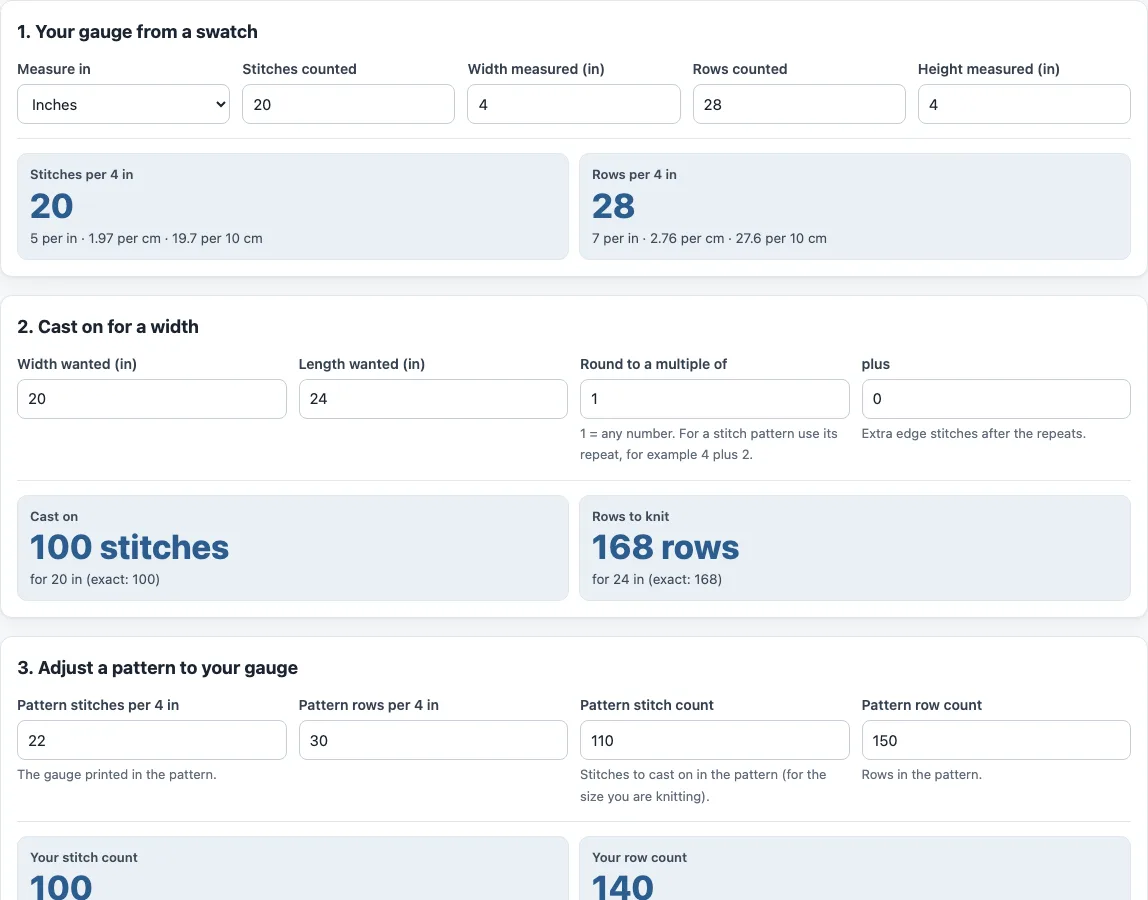
- Choose your unit under Measure in: inches or centimetres.
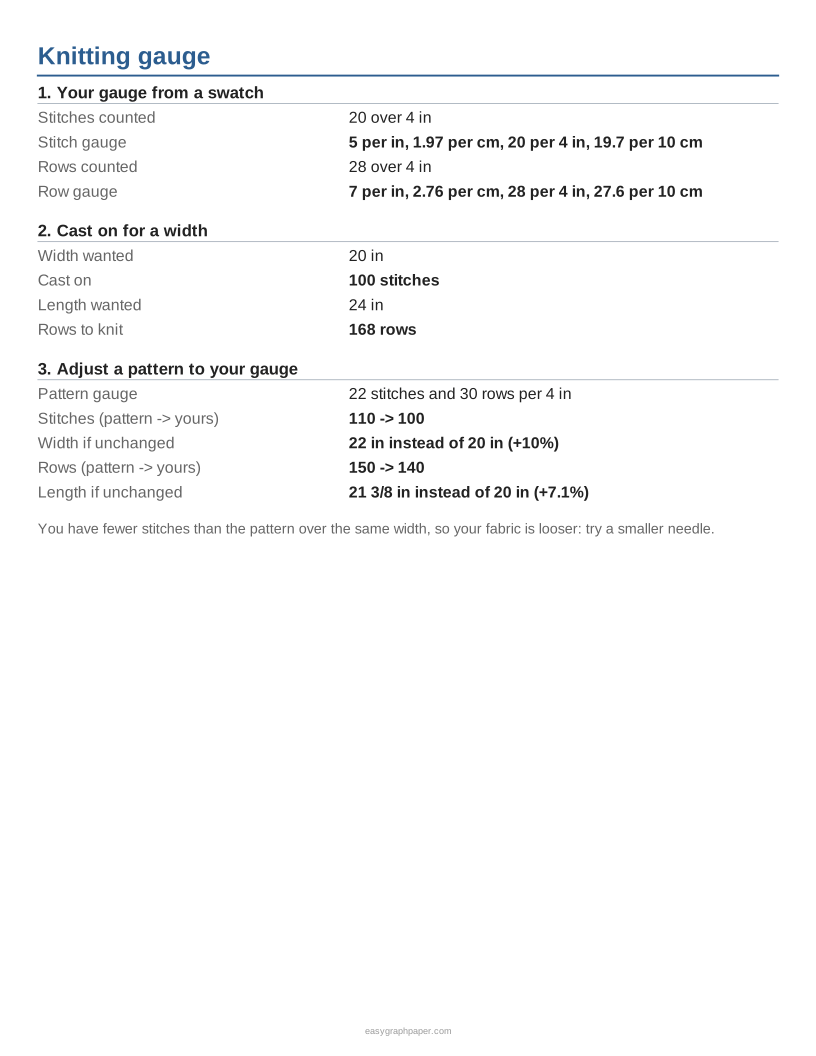
- In Section 1, Your gauge from a swatch, enter the Stitches counted over the Width measured, and the Rows counted over the Height measured. Read your stitches and rows per 4 in (or per 10 cm), per inch and per cm.
- In Section 2, Cast on for a width, enter the Width wanted and the Length wanted. The tool shows the stitches to cast on and the rows to knit.
- If your stitch pattern repeats, enter the repeat in Round to a multiple of and the edge stitches in plus, for example a multiple of 4 plus 2. The tool shows the width the rounded count really makes.
- In Section 3, Adjust a pattern to your gauge, enter the pattern’s Pattern stitches per 4 in and Pattern rows per 4 in, then its Pattern stitch count and Pattern row count. Read your adjusted stitch and row counts, and the size you would get if you followed the pattern unchanged.
- If the size is off, read the hint under the Section 3 results. More stitches than the pattern over the same width means your fabric is tighter, so try a larger needle. Fewer stitches means looser, so try a smaller needle.
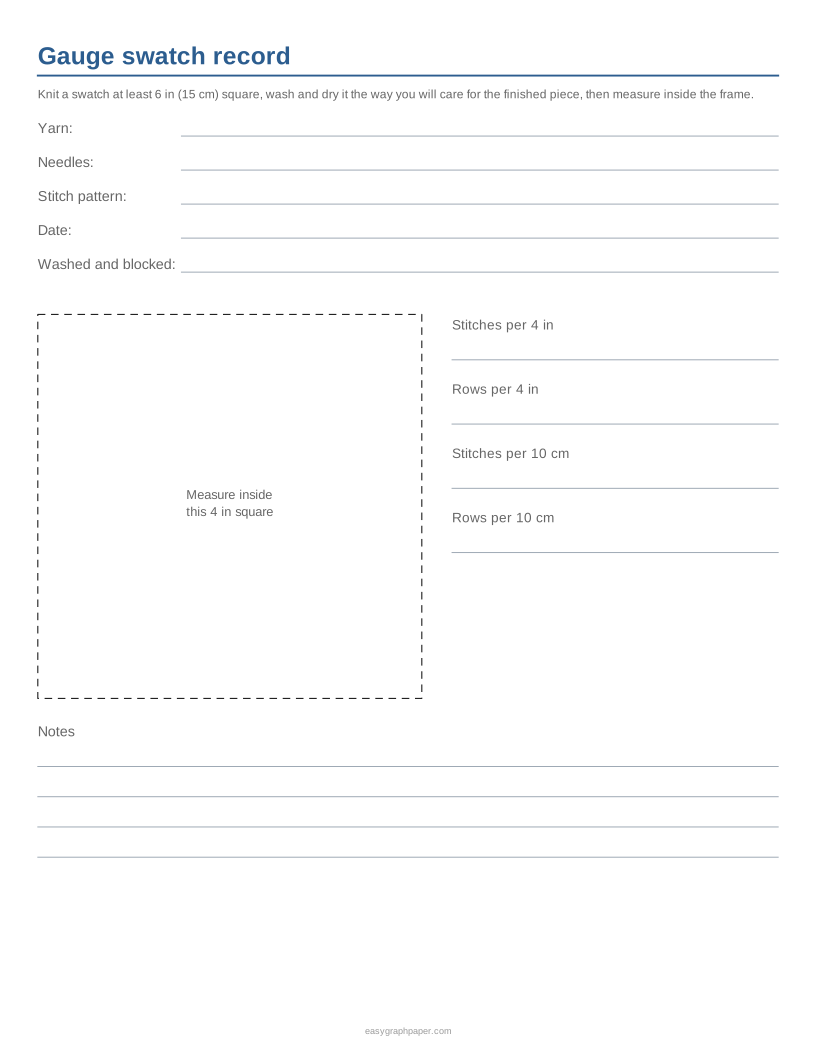
To keep your result, press Print or Download PDF. In the print options, pick the Results sheet, the Blank swatch card, or Both pages. Copy link saves your current inputs in the page address, so the same calculation opens again.
How do I measure knitting gauge?
To measure gauge, count the stitches and rows inside a 4 in (10 cm) square of knitted fabric. Knit a square at least 4 in or 10 cm wide, plus a few stitches on each side, so the edges do not affect your count. Wash and block the swatch the way you will treat the finished garment, because washing can change the fabric. Let it dry and lay it flat.
Count the stitches across and the rows up inside the 4 in measure, away from the edges. Partial stitches count, so a result such as 18.5 is valid. The counts work as a ratio: the number of stitches in a set width tells you how many stitches fit in each inch, and the calculator uses that ratio for every other width.
What does 20 stitches and 28 rows to 4 inches mean?
It means that across a 4 in width the fabric has 20 stitches, and up a 4 in height it has 28 rows. Divide by 4 to get the per-inch values: 20 ÷ 4 = 5 stitches per inch, and 28 ÷ 4 = 7 rows per inch. For centimetres, 4 in is about 10.16 cm, so the same fabric has 19.7 stitches and 27.6 rows per 10 cm.
Two simple formulas do most of the work:
- Stitches to cast on = width × stitches per inch, rounded to the nearest whole stitch. A 20 in width at 5 stitches per inch needs 100 stitches.
- Adjusted count = pattern count × your gauge ÷ pattern gauge. A pattern with 110 stitches at 22 stitches per 4 in, knitted at your 20 stitches per 4 in, needs 110 × 20 ÷ 22 = 100 stitches.
The same formula gives the pattern’s size with your fabric. Knitting 110 stitches at your 5 stitches per inch gives 22 in, which is 10 % wider than the 20 in the pattern intends. The row count works the same way for length.
Examples made with this generator
Frequently asked questions
What if my gauge is different from the pattern?
Enter the pattern’s gauge and counts in Section 3. The tool gives the stitch and row counts you need at your gauge, and shows the size you would get if you knit the pattern unchanged. If the size is too big or too small, change your needle size and knit a new swatch.
How many stitches should I cast on for a width?
Multiply the width you want by your stitches per inch, then round to the nearest whole stitch. For 20 in at 5 stitches per inch, cast on 100 stitches. If your stitch pattern has a repeat, use the rounding setting so the count fits it.
Should I go up or down a needle size?
Go up a needle size if you have more stitches than the pattern over the same width, because your fabric is tighter. Go down a size if you have fewer stitches, because your fabric is looser. Knit a new swatch after each change to check.
Does the calculator work in centimetres?
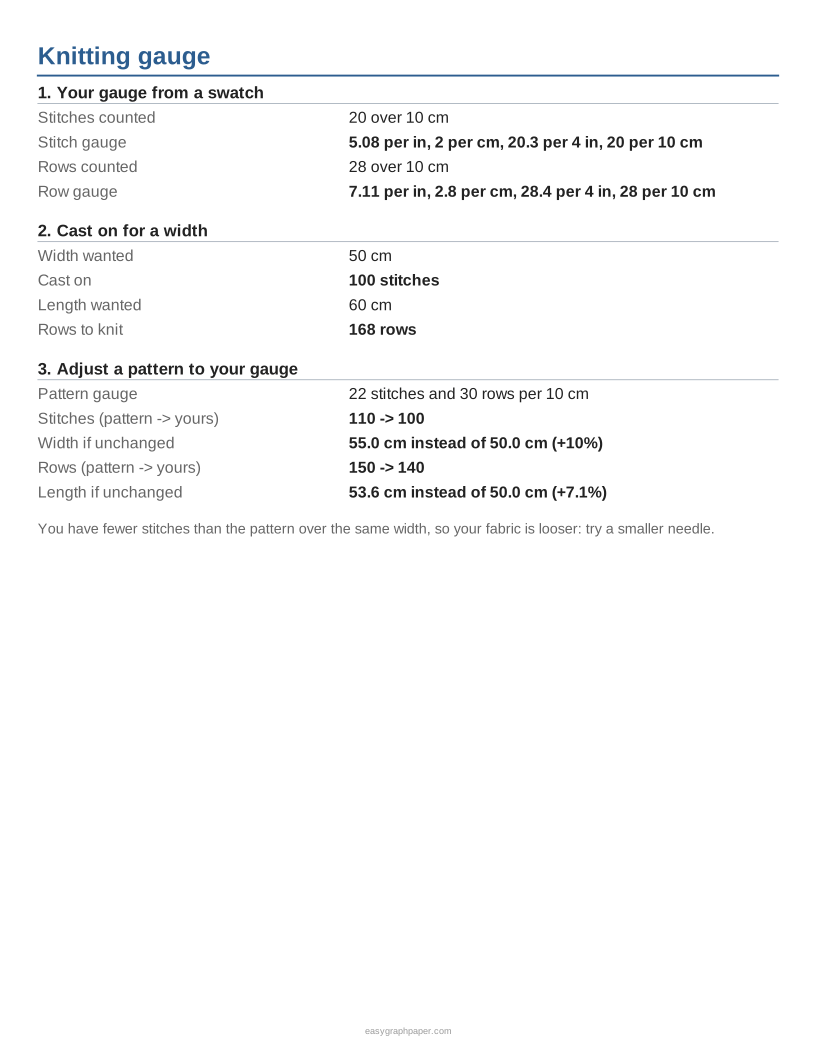
Yes. Set Measure in to centimetres, and results show stitches and rows per 10 cm and per cm. Centimetre results are shown to one decimal place.
Why can my stitch count be a half, like 18.5?
A stitch cut by the edge of the 4 in or 10 cm measure counts as a partial stitch. Count it as a half or a fraction, and enter the decimal or fraction in the field. This gives a more accurate gauge than rounding to a whole stitch.
Related tools
- Knitting needle size chart: Use it to compare needle sizes in different systems when you change needles after a swatch.
- Knitting chart maker: Use it to draw a colourwork or stitch chart once your stitch count is set.
- Filet crochet chart maker: Use it to plan a filet crochet design on a grid.
- Cross stitch fabric calculator: Use it to work out how much fabric a cross stitch project needs.
- Grid paper: Use it to sketch stitch patterns by hand on printable squares.
- Cross stitch pattern maker: Use it to turn an image into a cross stitch chart.
- Quilt binding calculator: Use it to estimate how much binding a quilt needs.