Hex Grid Paper Generator
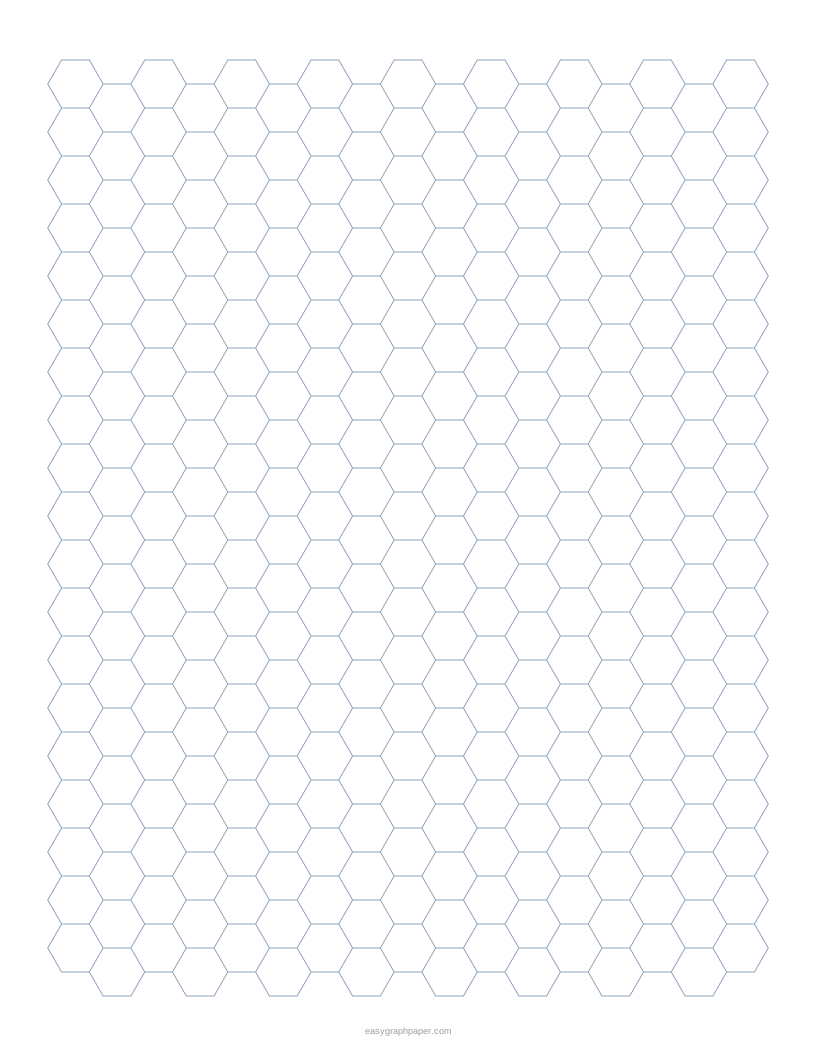
A printable hexagon grid sized across the flats, the way game maps are measured, with optional numbered cells.
How to use the hex grid paper generator
- Choose a paper size from US Letter, A4, US Legal, Tabloid, A3 or A5, then pick portrait or landscape.
- Set the hex size. Options are 1/4 in, 1/2 in, 3/4 in, 1 in, 1 cm, 15 mm and 2 cm, or type a custom size in millimetres or inches.
- Choose an orientation. “Flat top” makes the hexes form columns, and “Pointy top” makes them form rows.
- Tick “Number each cell” if you want a four-digit label on every hex.
- Open “Page and print settings” to set the margin, add an optional title, add a Name and Date line, choose how many identical pages the PDF should contain (1 to 50), or switch off the small site address in the bottom margin.
- Pick a line colour (light blue, grey, black, green, red, purple or a custom colour) and a line weight (fine, normal or bold).
- Check the preview, then use Print, Download PDF, SVG or Copy link.
For true-size hexes, choose 100% or “Actual size” in the print dialog and turn off “Fit to page” or “Shrink to fit”. Fitting to the page shrinks every hex slightly, so a 1 inch hex will no longer measure 1 inch. Copy link saves all your current settings, so you can recreate or share the same sheet later.
What is a hex grid?
A hex grid is a pattern of regular hexagons that fills a flat surface with no gaps. Every hexagon touches six neighbours, one across each of its six sides, and all six are the same distance from the centre. That equal spacing is why board games, wargames and tabletop RPG maps use hexes: movement in any of the six directions covers the same distance.
On this page, hex size is measured across the flats, from one flat side to the opposite flat side. A “1 inch hex” is therefore 1 inch across the flats. For a regular hexagon the rules are simple:
- Side length = across the flats ÷ √3, which is about 0.577 times the across-flats size.
- Across the corners = 2 × side length, which is about 1.155 times the across-flats size.
So a 1 inch hex has sides of about 14.67 mm and measures 29.33 mm from corner to corner. When you print, the generator draws only whole hexagons, and each shared edge is drawn once, so lines do not double up.
How to number a hex grid
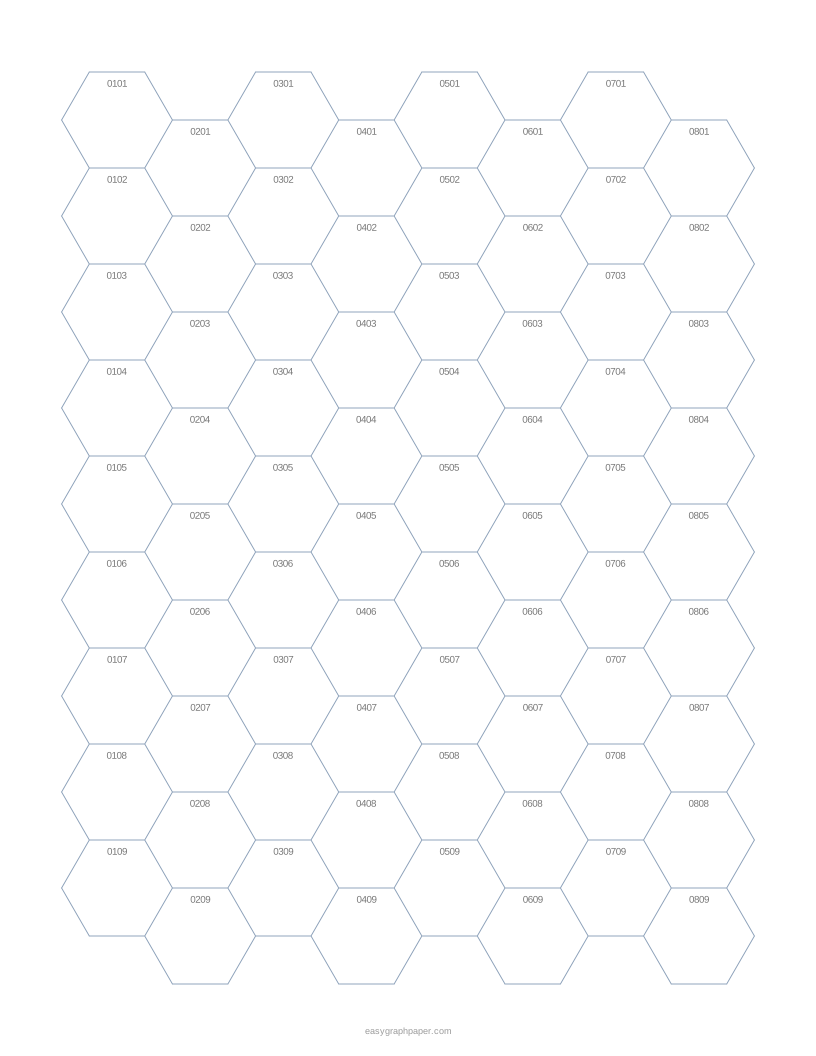
Numbering gives every hex an address so you can refer to it quickly, for example “the unit in 0712”. The generator uses a four-digit column-row label, written as CCRR, placed near the top of each hex. The first two digits are the column and the last two are the row, so 0102 means column 1, row 2. This is the convention used on many wargame maps, which makes it easy to call out positions during play.
Numbers are most useful when the grid is large, because a single hex is hard to locate by eye across dozens of rows. Turn numbering on before you print, and check the preview to confirm the labels sit where you want them. On a US Letter sheet with 1/2 inch hexes in flat-top orientation, you get 323 hexagons arranged in 17 columns and 19 rows, which is enough to number a full map.
Examples made with this generator
Frequently asked questions
How do I draw a hex grid by hand?
Drawing a hex grid by hand takes careful use of 60 and 120 degree angles, and the lines must meet exactly to keep every hex the same size. It is far quicker to use this tool, which draws the sheet for you at an exact size. Print it at 100% and you have a ready-made hex grid to trace or write on.
What is hexagonal graph paper used for?
Hexagonal graph paper is used for tabletop RPG and wargame maps, board game prototypes, and hexagonal tile or quilt layouts. Chemists also sketch organic ring structures on it, since benzene rings are hexagons. It is also handy in beehive and geometry lessons.
What size hex do I need for 1 inch miniatures?
Use a 1 inch hex, measured across the flats. A round base that is 1 inch across fits exactly inside a 1 inch hex, because the circle touches all six flat sides. This gives each miniature one clear cell.
Why do my hexes look smaller when I print?
Your print dialog is probably set to “Fit to page” or “Shrink to fit”, which scales the whole sheet down. Choose 100% or “Actual size” and turn that setting off. Then measure a hex with a ruler to check it.
How many hexes fit on one sheet?
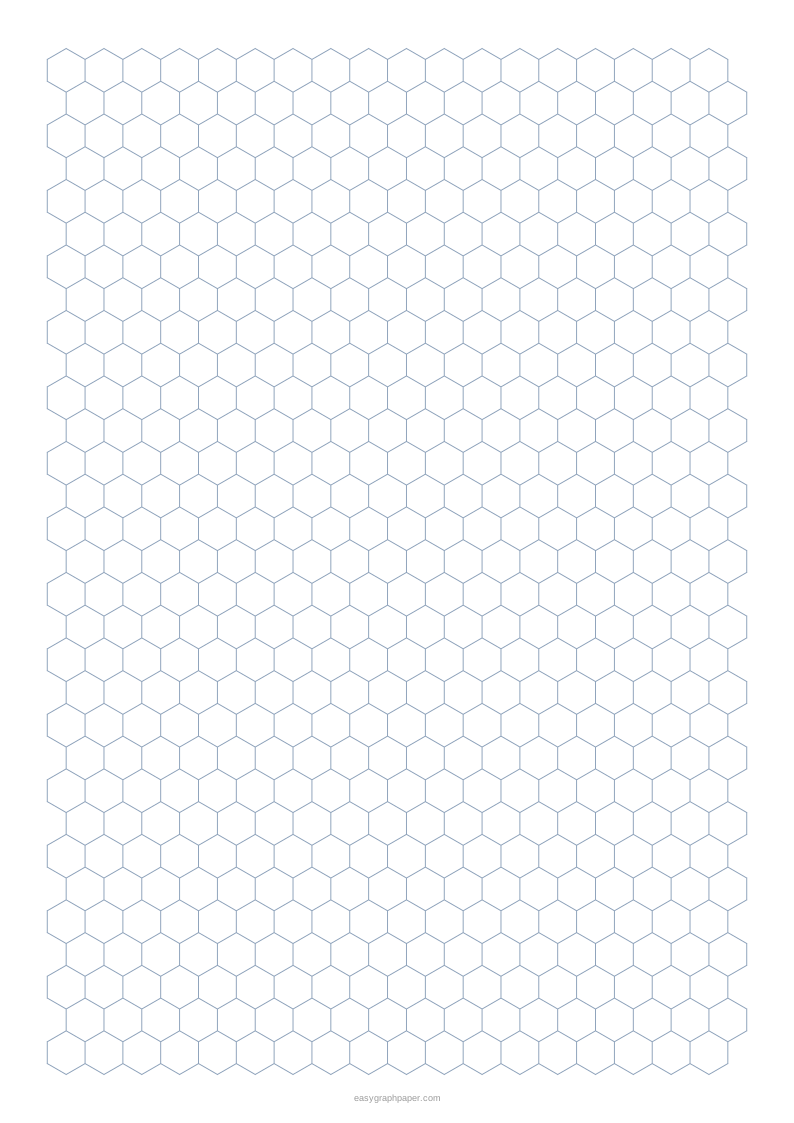
It depends on the paper and hex size. On US Letter with 10 mm margins, 1/2 inch hexes give 323 hexagons, and 1 inch hexes give 72 (8 columns by 9 rows). On A4 with 1 cm hexes, you get 567.
Can I share the exact sheet I designed?
Yes. Click Copy link to save all current settings in a link. Anyone who opens it can recreate the same sheet, and you can reopen it later from the same link.
Related paper templates
- Isometric graph paper: Use it when you need a 3D-style grid for drawing isometric objects or rooms.
- Grid paper: Use it for standard square grids, such as maps with square cells or general planning.
- Pixel art grid: Use it to plan sprites and pixel artwork on a square grid.
- Dot grid paper: Use it when you want dots instead of lines for freehand sketching.
- Graph paper generator: Use it to make standard graph paper with the full set of options.
- Perspective grid: Use it when you are drawing scenes with vanishing points.