Handwriting Paper Generator
Pick a line height and get printable three-line writing paper for kindergarten, primary or cursive practice.
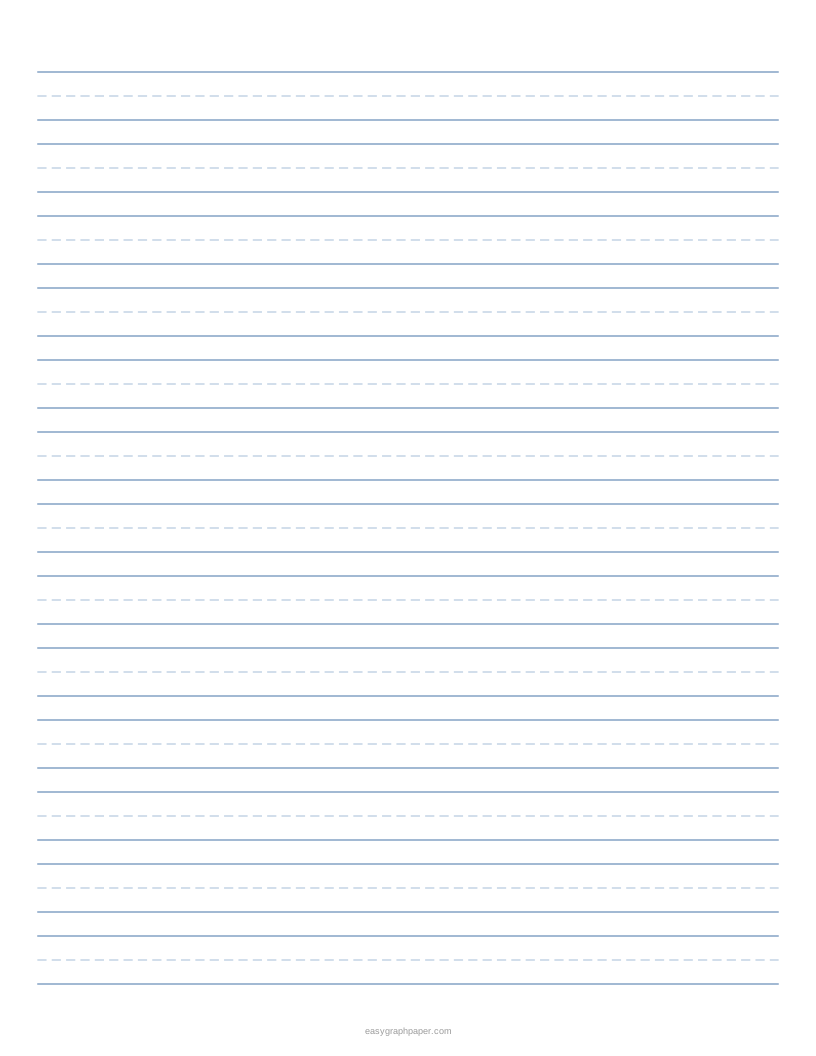
Handwriting paper is a printable sheet of three-line writing rows that helps children learn letter size and placement. This free handwriting paper generator builds one in your web browser, so you can set the spacing, paper size and extras and print it right away. It needs no sign-up or download.
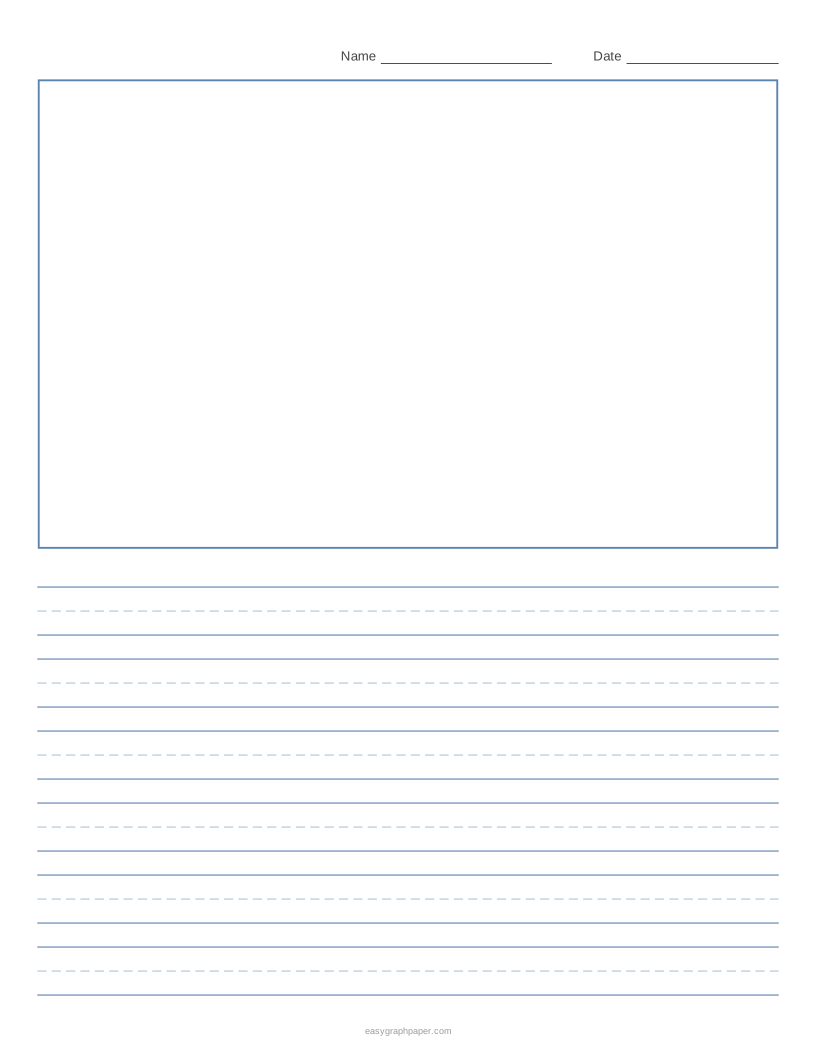
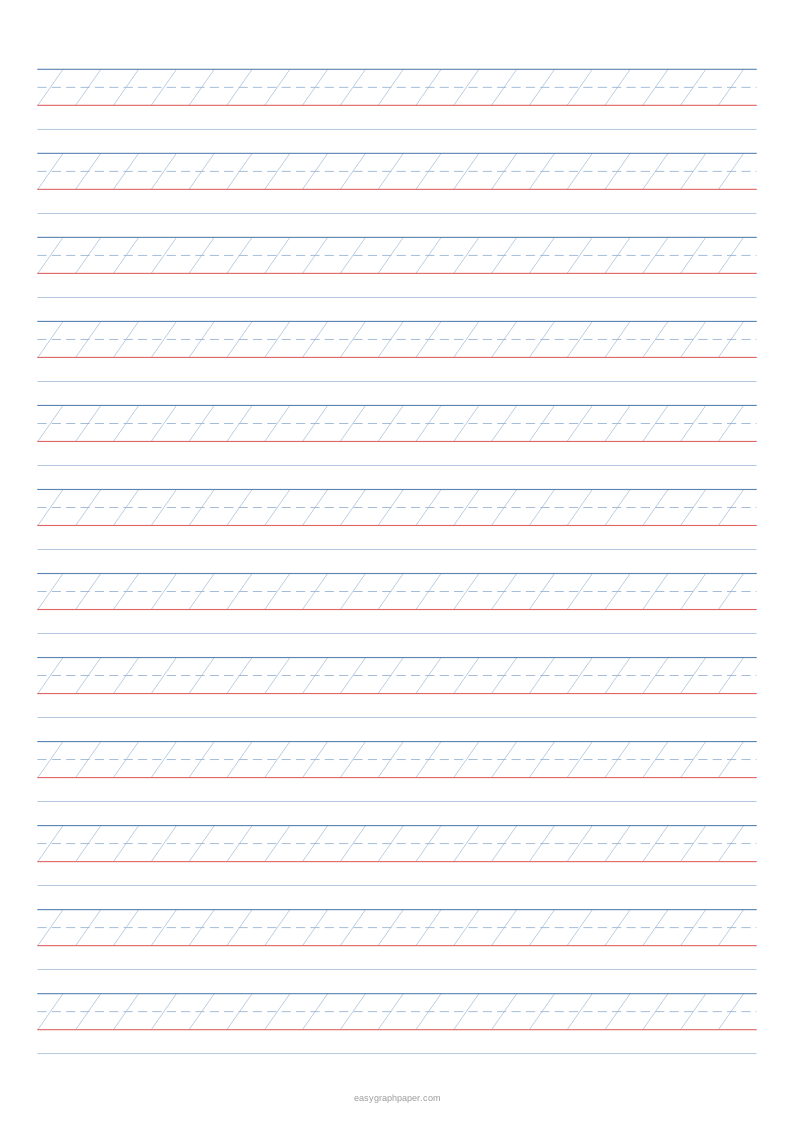
Each row has a solid top line, a dashed midline and a solid baseline. You can change the spacing to suit a young beginner or an older child who writes smaller. Presets cover common sizes from 1 inch down to 1/4 inch, plus a story paper layout with a picture box and a cursive layout with slanted guides. You can also choose the paper size, margins, a title, a name and date line, and the number of pages.
How to use the Handwriting paper generator
- Pick a preset to start, such as “Kindergarten, 1 in”, “1/2 in (primary)” or “Cursive with slant”.
- Set the line height. Choose a preset from the list or enter a custom size in mm or inches.
- Choose the midline style: dashed, dotted or none. Turn on the red baseline if you want one.
- Turn on the descender line if the child will write letters with tails such as g, j, p, q and y.
- For story paper, turn on the picture box and choose the top third or top half of the page.
- For cursive practice, pick a slant angle: 52°, 55°, 60° or 65°.
- Select the paper size (US Letter, A4, Legal, Tabloid, A3 or A5) and the orientation.
- Set the margin, then add a title, a Name and Date line, or a number of pages from 1 to 50 if you need them. You can also switch off the small site address in the bottom margin.
- Pick the line colour and line weight.
- Check the line under the preview to see how many rows fit on the page.
Click Print to open the print dialog with the page set to the exact paper size. Choose 100% or “Actual size”, not “Fit to page”, so the lengths print as set. Download PDF gives you a vector PDF, SVG gives you a vector file, and Copy link saves all your current settings in a link you can reopen later.
What is handwriting paper?
Handwriting paper is lined paper with three lines per writing row, used to teach children how to size and place letters. It is also called primary writing paper, primary lined paper or three-line paper, and the same layout is what people search for as penmanship paper printable or handwriting lines.
The three lines do the work. The top line marks the height of tall letters and capitals. The dashed midline shows where small letters stop. The baseline is the line every letter sits on. Some teachers like a red baseline so the line every letter sits on stands out; the red baseline option prints it that way. When a child can see these three marks, they learn the proportions of letters before they worry about joining them.
How to write on handwriting paper?
Start every letter on the baseline and keep the letter’s height inside the right band. Tall letters such as b, d, f, h, k, l and t reach up to the top line, and capital letters do too. Small letters such as a, c, e, and o stay between the baseline and the dashed midline. Letters with tails, such as g, j, p, q and y, extend below the baseline.
Use the top line and the baseline as the first guide when a letter looks too large or too small. Write one row at a time, and keep the letters evenly spaced along the row. If the child is learning cursive, the slanted guide lines show the forward lean that the letters should follow. Small, steady practice on one row is more useful than filling the whole page quickly.
Examples made with this generator
Frequently asked questions
Which line height for kindergarten?
Most kindergarten children do best with the largest line heights, 1 inch or 3/4 inch, because their letters are big and loose. Larger rows give them room to form each letter without crowding the lines. There is no single correct size, so print one sample and check that the child can fit letters inside the rows comfortably before you print a full pad.
Can I make cursive practice paper?
Yes. Choose the “Cursive with slant” preset, or set the slant lines to 55° for a common choice. The slant lines are faint guides that show the forward lean of the letters. Turn on the descender line if you want loops to sit below the baseline in the right place.
How many rows fit on a page?
The rows fill the page with whole rows, centred vertically, so the count depends on the line height and the paper size. On US Letter with 10 mm margins, 3/8 inch rows give 16 rows, while 1 inch rows with 1/2 inch between them give 7 rows. The line under the preview reports the exact count for your settings.
Why should I print at 100%?
Printing at 100% or “Actual size” keeps every line length exactly as set. “Fit to page” scales the sheet slightly, so a 1/2 inch row can end up measuring a little more or less than intended. This matters when a child is comparing letter sizes against the printed lines.
Is this handwriting paper generator free to use?
Yes. The generator is free and needs no sign-up or download. It draws the sheet in your web browser, and nothing is uploaded.
Can I make several pages at once?
Yes. Under the page settings, enter a number of pages from 1 to 50, and the PDF will contain that many identical pages. This is useful when you need a full practice pad for one child.
(FAQ answers are placed in the explain module above.)
Related tools
- Lined paper: Use it when you need plain ruled lines without the top line, midline or baseline structure of handwriting rows.
- Calligraphy paper: Use it for practising letter forms with angled pen strokes, where you need slanted guides and wider spacing.
- Cornell notes template: Use it when a student needs a note-taking layout with a cue column and summary area.
- Grid paper: Use it for drawing, graphing or maths work that needs squares rather than writing rows.
- Dot grid paper: Use it for sketching, bullet journals or layouts where you want light dots instead of full lines.
- Comic strip template: Use it to plan panels and speech bubbles for a picture story.
- T chart template: Use it to sort or compare two sets of ideas side by side.